Wild horses
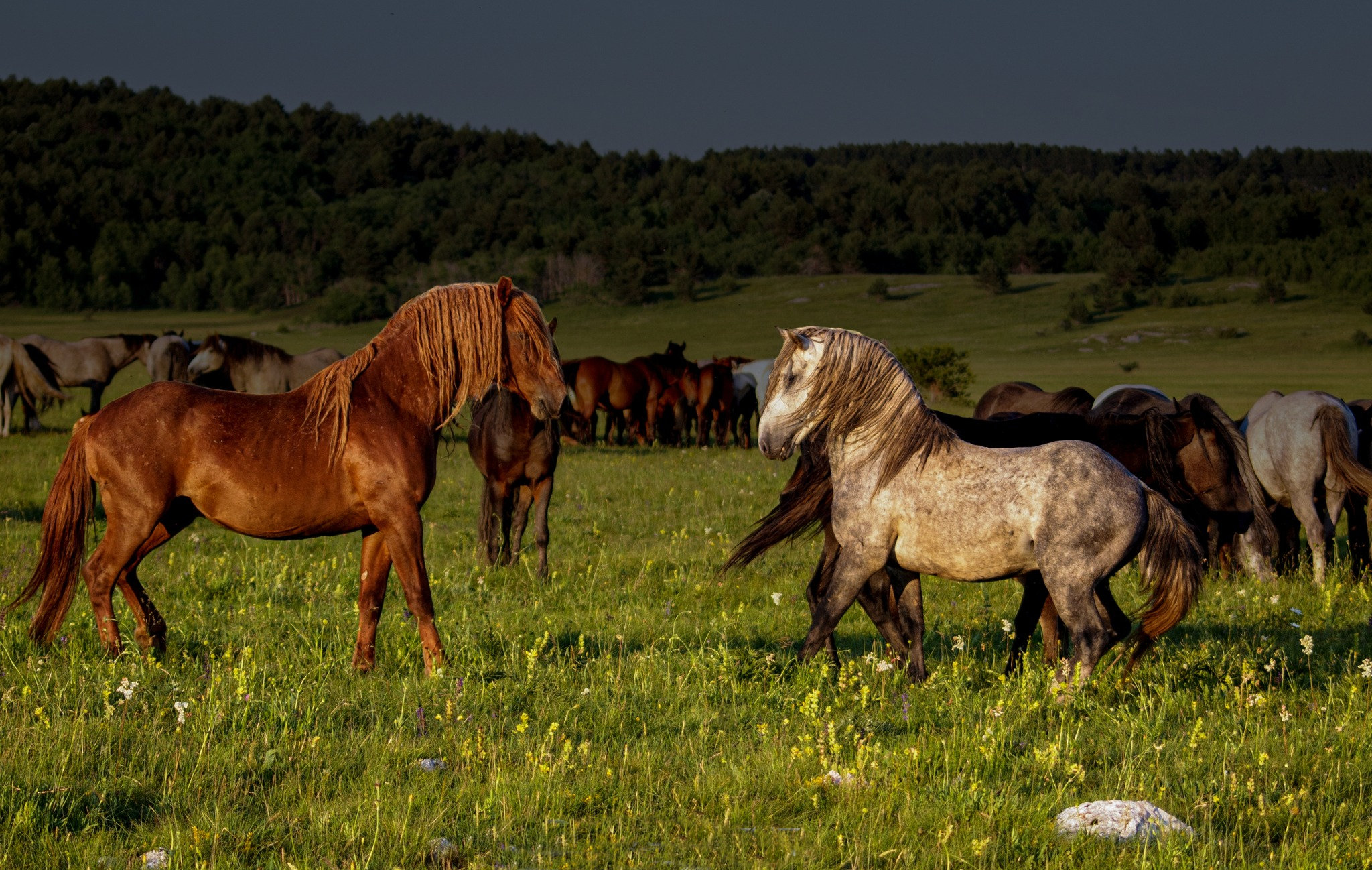
Wild Horses of Livno – Guardians of Freedom on the Kruzi Plateau
Some scenes in nature stay etched in your memory forever. One of them awaits you on the vast plateaus above Livno – herds of wild horses galloping freely beneath the peaks of Dinara, Kamešnica, Cincar, and Tušnica. Watching their manes ripple in the wind as they move across endless pastures is one of the most beautiful natural experiences Bosnia and Herzegovina has to offer.
Horses – From Ancient Steppes to Symbols of Freedom
The first ancestors of the horse appeared over 50 million years ago, while the modern horse (Equus ferus caballus) evolved roughly 4 million years ago. It was domesticated about 5,500 years ago on the great steppe expanses of Asia, where it became an indispensable companion to humans in work, transport, and warfare.
Over the centuries, the horse has come to embody strength, endurance, loyalty, and freedom. Few animals stir a sense of connection to nature as powerfully as a horse in full gallop.
Wild Horses Around the World
Today, it is estimated that between 2 and 2.5 million free-roaming horses live on Earth. The most famous populations are found on several continents:
• Mustangs in North America – descendants of Spanish horses and one of the most iconic symbols of the Wild West.
• Brumbies in Australia – descendants of horses released into the wild by settlers.
• Przewalski’s horse in Mongolia – the only truly wild horse that has never been domesticated.
• Smaller populations in Europe – mostly within reserves or protected areas.
Still, few places exist where horses live completely free, without fences or constant human oversight.
Wild Horses of Livno – One of Europe’s Largest Free-Roaming Herds
On the plateaus above Livno lies one of the largest free-roaming herds of wild horses in Europe. Their story began in the mid-20th century, when mechanisation gradually replaced horses in farming and transport. Many were simply set free, and over decades, nature shaped the herd we see today.
Today, more than 800 horses live in this area, wandering freely across pastures, watering holes, and mountain passes. That very freedom is what makes them special – they are not residents of a reserve but true masters of the Livno highlands.
When to Visit and What to Experience
For nature lovers, photographers, and wildlife enthusiasts, encountering the Livno horses is a truly unique experience.
📍 The best-known locations are the Kruzi Plateau, the area around Mount Cincar, and the vast pastures beneath Mount Dinara.
🌱 Spring (April to June) brings the most excitement. This is when stallions battle for dominance over the herd and the favour of the mares. Clashing bodies, rearing on hind legs, and thundering gallops across green pastures offer scenes rarely seen anywhere else in Europe.
🌅 Early morning and dusk are ideal for observation and photography. During these hours, the horses are most active, and the light creates spectacular photo opportunities.
☀️ Summer brings calmer days. Herds gather with their foals, and the landscape resembles scenes from the finest wildlife documentaries.
🍂❄️ Autumn and winter reveal a very different side of the Livno plateaus. Fog, snow, and strong winds create powerful images of survival in harsh mountain conditions.
How to Behave Around Wild Horses
Although accustomed to the presence of people, the Livno horses remain wild animals and deserve respect.
🐴 Do not feed the horses. Do not give them bread, sugar, salt, fruit, or any other food. Such items can harm their health and alter their natural behaviour.
🐴 If you want them to approach you, stay calm. Avoid sudden movements, loud calling, or running toward them. Horses are curious but also very cautious.
🐴 Make yourself smaller. Crouching or sitting quietly often seems less threatening, making horses feel safer in your presence.
🐴 Sometimes, if they feel safe and approach people on their own, they may allow brief physical contact. Still, always remember they are wild animals, and any interaction is at your own risk.
🐴 Watch their body language. If a horse turns its ears back, becomes tense or nervous, it may be focused on another horse – preparing to chase off a rival or follow a mare. In such moments, its attention is not on people, so it’s best to increase your distance to avoid accidental injury.
🐴 During fights or courtship, stallions focus entirely on other horses and very little on their surroundings. Given their strength, an accidental kick or sudden move could cause serious injury. Observe such scenes only from a safe distance.
🐴 If a horse lifts its head and moves toward you, stay calm. Do not run or panic. In most cases, it is curiosity or an attempt to assess the situation. If it approaches too decisively, raise your hand, stand your ground, and a short hiss or firm voice is usually enough to stop the animal and make it move away.
🐴 Attacks on humans are extremely rare. The wild horses of Livno are generally shy and naturally avoid people. With a little respect and common sense, encountering them remains a safe and unforgettable experience.
🐴 For photography, be patient and respect the animals. Do not use drones, firecrackers, sirens, or other methods to deliberately scare the horses into galloping for more dramatic shots. Such behaviour causes stress, can lead to injuries, and is punishable under local regulations.
Why Visit Them?
The wild horses of Livno are not just a tourist attraction. They are a symbol of freedom, resilience, and coexistence between humans and nature. Their story speaks of animals that found their way back to the wild and created one of Europe’s most fascinating natural treasures.
If you love nature, photography, mountains, or simply seek an experience that leaves a lasting mark on your memory, the Livno plateaus and their wild horses will give you scenes you will never forget.
✨ Once you feel the ground tremble beneath their hooves and watch a herd disappear beyond the horizon, you will understand why so many call them the last symbol of true freedom in these lands.