Franciscan Museum of Gorica
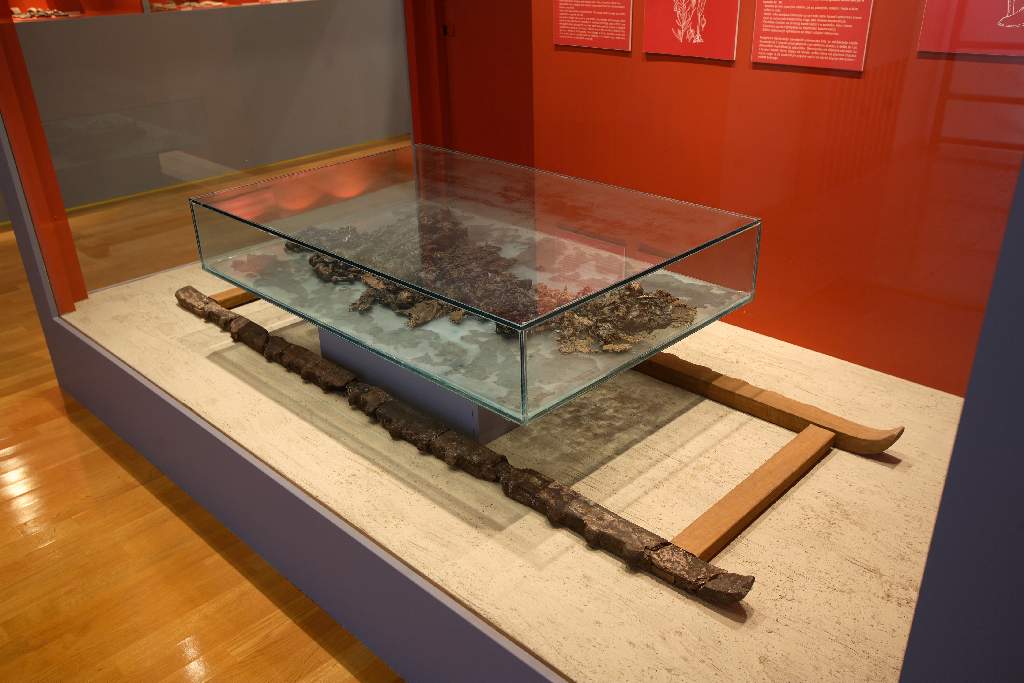
The permanent exhibition of the archaeological collection has been realized in the new museum complex building, spanning approximately 350 m² of display space. Through a large number of exhibits from the archaeological collection, the exhibition presents the cultural and historical continuity of the Livno Field and its neighbouring fields – from prehistoric periods to the 16th century. Special attention has been paid to professional, educational, and artistic aspects, as well as to a logical visitor flow and exhibition viewing.
In addition to the chronological sequence, the spatial layout is defined by thematic units within each time period: daily life, art, religion, and writing. Each historical period is marked by a distinct colour: Prehistory – earthy red; Roman period – red; Early Christianity – yellow-orange; Middle Ages – purple. The archaeological exhibits are accompanied by illustrative materials and ambient reconstructions within the space.
- Part of the illustrative material has been transformed into video projections, which are shown with a musical background as part of the permanent exhibition. Visitor interaction includes playing a Roman board game with tokens, as well as the opportunity to weave on a reconstruction of a prehistoric wooden loom.
The oldest exhibited artefacts date from the Late Eneolithic (Copper Age). The Early Bronze Age is marked by ceramic finds from hillforts (gradine). A special exhibition unit is dedicated to finds from a prehistoric grave beneath Tumulus No. 16 on the Kupres Field. The Delmatae (an Illyrian tribe) are represented through hillfort finds, grave goods, and a warrior's hoard. Upon the arrival of the Romans, the Delmatae adopted elements of Roman civilization. This exhibition section is divided into several thematic units: the Roman army, Romanization, roads, architecture, clothing, tools and crafts, stonemasonry workshops, epigraphy, games, cults, and funerary customs. Early Christianity is evidenced by fragments of church architecture and furnishings. Special units display finds related to the baptismal well and early Christian liturgy, daily life, and Late Antique necropolises. The transition from Antiquity to the Middle Ages is marked by the tips of Avar arrows. The arrival of the Croats marked the beginning of the Middle Ages. A special thematic unit is dedicated to church architecture, with exhibited fragments of church furnishings. Display cases contain jewellery, ceramic vessels, tools, and weapons from graves. In the Late Middle Ages, in addition to jewellery and clothing items, the most important unit consists of finds from the Franciscan Monastery of St. John (Sveti Ive) in Livno, dating from the early 14th century. A special unit related to the Late Middle Ages is Writing. A particularly significant place is held by the stone inscription bearing the name of Priest Tjehodrag from Lištani, written in Croatian Cyrillic script from the mid-12th century. The archaeological exhibition ends as a historical-cultural unit with the arrival of the Ottomans, which began a new era.
Conceptual design of the exhibition and selection of materials:
Marija Marić Baković, Museum Advisor.
Authors of the spatial concept, display cases, and visual design of the exhibition:
Marko Rogošić and Miran Palčok
For more information visit: https://www.fmgg-livno.com/